minolta x 700 manual
Minolta X-700 Manual & Troubleshooting
Finding a clear PDF version of the Minolta X-700 repair manual can be challenging due to poor scan quality in some online resources. Several options exist, including user-shared documents and dedicated camera manual archives.
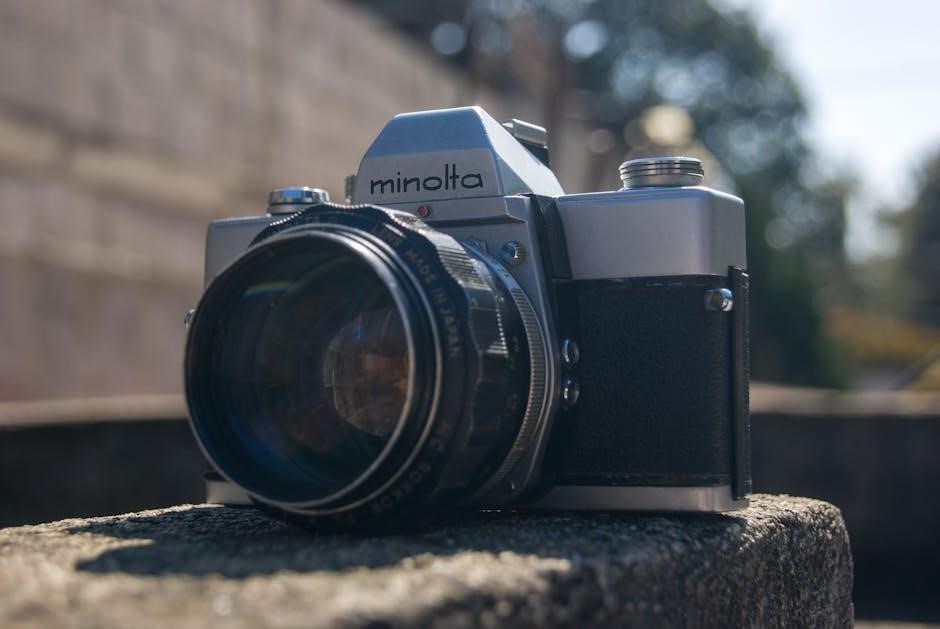
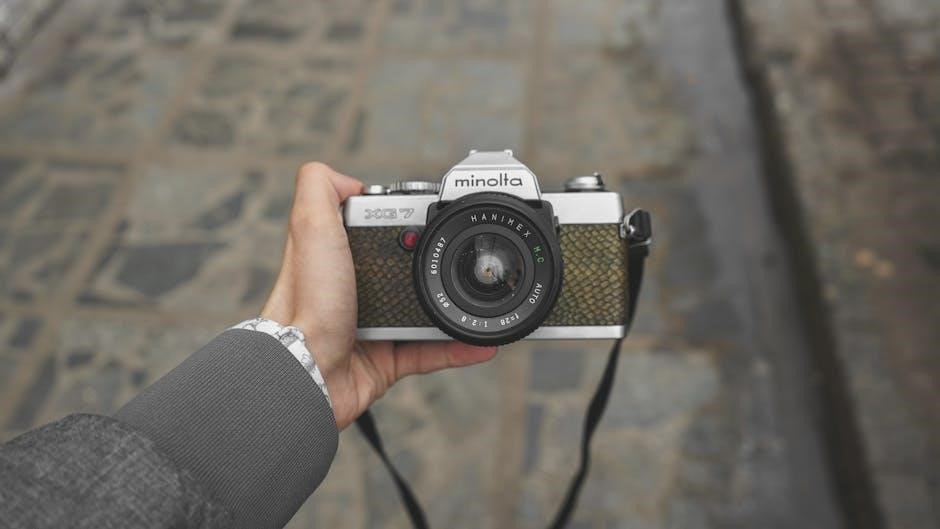
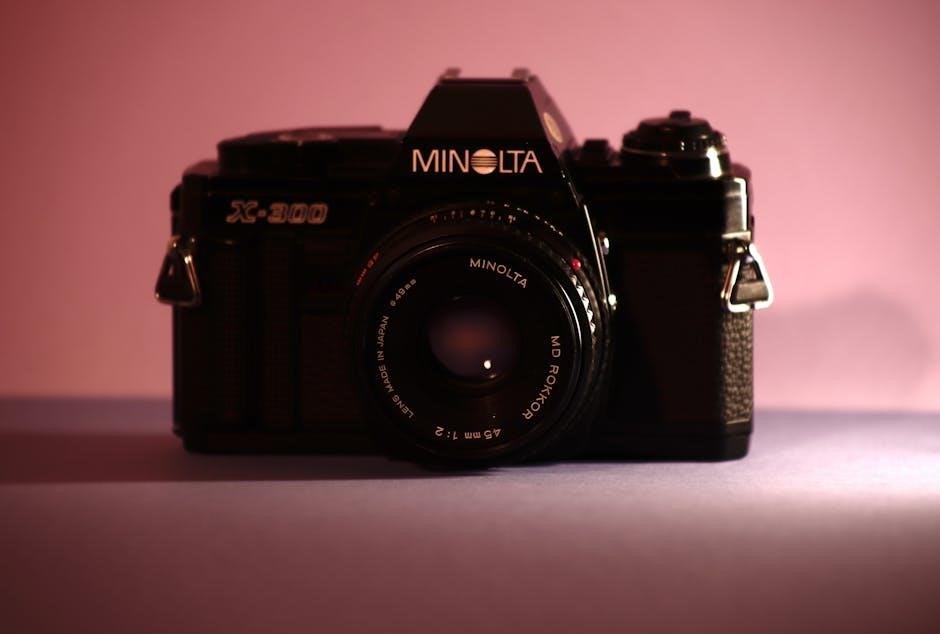
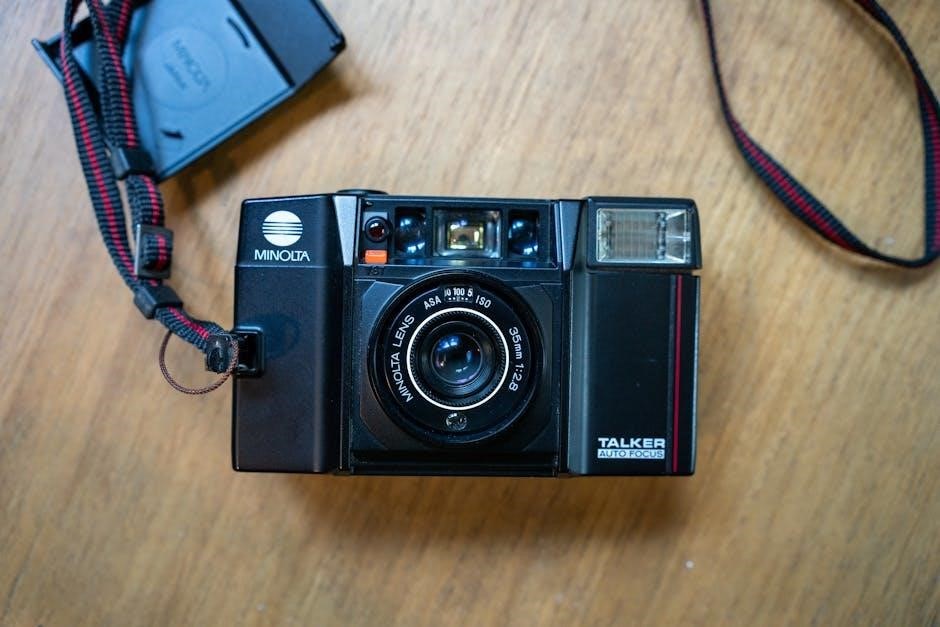
The Minolta X-700, released in 1983, represents a pivotal moment in 35mm SLR camera history. It successfully bridged the gap between fully mechanical cameras and those heavily reliant on electronic components, offering photographers a blend of reliability and modern features. This camera quickly gained popularity for its user-friendly design, robust build quality, and exceptional value.
Its appeal stems from its electronically controlled shutter, which provided accurate and consistent exposures, alongside a manual override for experienced users desiring full creative control. The X-700’s compatibility with the extensive Minolta MD lens mount further enhanced its versatility, allowing photographers to explore a wide range of photographic styles.
However, like any vintage camera, the X-700 can present challenges for modern users. Finding a comprehensive and legible manual is often the first step in understanding its operation and addressing potential issues. While many resources exist online, the quality of scanned PDF versions can vary significantly, sometimes making circuit diagrams and detailed instructions difficult to decipher. This guide aims to assist owners in navigating these challenges.
Understanding the X-700’s Key Features
The Minolta X-700 boasts several defining features. Its electronically controlled shutter prioritizes aperture control, a favored method for many photographers, while still offering full manual operation. The camera’s exposure compensation dial is crucial for adjusting brightness in challenging lighting situations. Understanding the viewfinder display, including the LED indicators for exposure, is essential for accurate shooting.
The X-700’s depth-of-field preview lever allows visualizing the effect of aperture on focus, aiding in creative control. Its self-timer function is straightforward, and the film advance lever provides smooth and reliable film transport. The camera’s compatibility with the Minolta MD lens mount opens a world of lens options, each influencing image characteristics.
A detailed manual is vital for mastering these features. Many online PDF versions exist, but clarity can be an issue; Knowing how to interpret the camera’s settings and indicators, as explained in a good manual, unlocks the X-700’s full potential and ensures optimal photographic results.
Locating the Minolta X-700 Manual (PDF)
Finding a reliable Minolta X-700 manual in PDF format requires diligent searching. Several websites archive vintage camera documentation, though quality varies significantly. Resources like ManualsLib and similar online repositories often host scanned copies, but scan clarity can be problematic, making circuit diagrams difficult to decipher.
Dedicated photography forums and communities frequently share links to manuals, sometimes offering higher-resolution scans or transcribed versions. Searching specifically for “Minolta X-700 service manual PDF” yields numerous results, but verifying the source’s trustworthiness is crucial. Beware of sites with excessive advertisements or suspicious download links.
Alternatively, exploring camera manual download sites specializing in classic film cameras can prove fruitful. While a pristine, high-quality PDF might be elusive, persistence often uncovers a usable version. Remember to check file sizes and preview pages before downloading to ensure readability.
Common Issues with the X-700 & Troubleshooting
The Minolta X-700, while robust, exhibits common issues with age. A frequent problem is the light seal deterioration, causing light leaks onto film – replacement kits are readily available. Sticky shutter curtains, often due to lubricant breakdown, can lead to inaccurate exposures; careful cleaning, guided by a service manual, is often required.
Another common fault involves the film advance mechanism, sometimes becoming stiff or erratic. This often necessitates disassembly and lubrication. Electrical contacts can corrode, impacting metering accuracy or causing erratic behavior. Cleaning these contacts with isopropyl alcohol can restore functionality.
When troubleshooting, always consult a PDF version of the X-700 repair manual for detailed diagrams and procedures. Avoid forceful disassembly, as parts are delicate. If unsure, seeking professional repair is advisable to prevent further damage.
X-700 Repair Manual Availability & Quality
Locating a high-quality Minolta X-700 repair manual presents a challenge. While numerous PDF versions circulate online, scan quality varies significantly. Many freely available copies suffer from poor resolution, making circuit diagrams and detailed instructions difficult to decipher. Dedicated camera manual websites sometimes offer better quality scans, but often at a cost.
Original, factory-issued manuals are rare and command high prices on auction sites. Third-party repair manuals, though less common, may provide clearer explanations and diagrams. Before purchasing any manual, carefully review sample pages to assess its clarity and completeness.
Consider joining online photography forums dedicated to classic cameras; members often share links to reliable manual sources or offer assistance with repairs. A clear, detailed manual is crucial for successful X-700 maintenance and repair, preventing further damage during disassembly.
Wireless Printer Connectivity Problems (General)
While seemingly unrelated to the Minolta X-700, understanding general wireless printer issues provides context for modern troubleshooting approaches. Common problems include the printer not appearing in the network, incorrect IP address assignments, and signal interference. Often, a simple reboot of both the printer and the router resolves temporary connectivity glitches.
Configuration errors, such as an incorrect wireless password or network selection, are frequent culprits. Utilizing the printer’s built-in network test report can quickly identify signal strength and configuration issues. Outdated printer drivers on the computer can also cause connectivity failures, necessitating updates.
For persistent problems, assigning a static IP address to the printer can improve reliability. This prevents the IP address from changing, ensuring consistent communication. These troubleshooting steps, though for printers, highlight the importance of systematic diagnostics applicable to any device.
Identifying Printer Issues in Windows
Although focused on a film camera, recognizing how Windows handles device issues offers a parallel to diagnosing problems with the Minolta X-700 – isolating the source of the malfunction. Windows provides several tools for identifying printer problems. The “Devices and Printers” section in Control Panel displays the printer’s status and allows basic troubleshooting;
Error messages within Windows often pinpoint the issue, whether it’s a communication failure, driver problem, or paper jam (though irrelevant to the X-700, the principle applies). Checking the printer queue reveals if jobs are stuck or experiencing errors. The Event Viewer logs detailed system events, potentially revealing printer-related errors.
Furthermore, the Windows troubleshooter automatically detects and attempts to fix common printer problems. These diagnostic steps, mirroring a methodical approach to camera repair, help narrow down the cause of the issue before attempting more complex solutions.
Running Network Diagnostic Tests
While seemingly unrelated to a mechanical film camera like the Minolta X-700, understanding network diagnostics parallels the systematic testing required in camera repair – isolating the fault. Modern printers often include built-in network test reports, accessible through the printer’s control panel or web interface. These tests assess signal strength, connectivity, and configuration settings.
In Windows, the built-in Network Troubleshooter can automatically detect and resolve common network issues affecting printer connectivity. This tool checks network adapters, IP address configurations, and DNS settings. Running this diagnostic can quickly identify basic network problems preventing communication with the printer.
Advanced users can utilize command-line tools like `ping` and `tracert` to test network connectivity and identify potential bottlenecks. These tests, similar to checking electrical continuity in the X-700, help pinpoint where the connection is failing.
Fixing Wireless Printer Connectivity in Windows 10
Although the Minolta X-700 is a fully mechanical device, the troubleshooting mindset applies to modern digital peripherals. Fixing wireless printer issues in Windows 10 often involves revisiting fundamental settings. Start by ensuring the printer is powered on and connected to the same Wi-Fi network as your computer. A simple reboot of both the printer and your Windows 10 machine can resolve temporary glitches.
Next, verify the printer is correctly added to Windows 10. Remove and re-add the printer through “Settings > Devices > Printers & scanners”. During re-installation, ensure you select the correct printer driver. Outdated or corrupted drivers are a frequent cause of connectivity problems.
Consider temporarily disabling your firewall or antivirus software, as these can sometimes interfere with printer communication. If the printer connects successfully with these disabled, adjust their settings to allow printer access.
Troubleshooting Printer Not Found Issues
Similar to diagnosing issues with a classic Minolta X-700, methodical troubleshooting is key when a printer isn’t recognized. Begin by confirming the printer is powered on and displaying a ready status. Check physical connections – for USB printers, ensure the cable is securely connected to both the printer and computer. For wireless connections, verify the printer is connected to the correct Wi-Fi network.
In Windows, navigate to “Settings > Devices > Printers & scanners” and see if the printer appears in the list. If not, click “Add a printer or scanner” and allow Windows to search. If it still isn’t found, try adding it manually by specifying the printer’s IP address (if known).
Run the Windows Printer Troubleshooter (accessible through Settings) as it automatically detects and fixes common problems. A network diagnostic test can also reveal connectivity issues. Remember to update printer drivers, as outdated software can cause recognition failures.
Addressing Print Jobs Stuck in the Queue
Much like clearing a jammed film advance on a Minolta X-700, resolving a stuck print queue requires a systematic approach. First, access the print queue by double-clicking the printer icon in the system tray or through “Settings > Devices > Printers & scanners”. Examine the list of pending documents – often, simply canceling the problematic job will free up the queue.
If canceling doesn’t work, try restarting the Print Spooler service. Press Win + R, type “services.msc”, and locate “Print Spooler”. Right-click and select “Restart”. This often clears temporary errors. If the issue persists, clear the entire print queue by pausing the spooler, deleting all documents, and then resuming the service.
Ensure the printer driver is up-to-date, as compatibility issues can cause jobs to hang. Finally, check for conflicting applications or processes that might be interfering with printing.
Printer Spooler Crashes & Solutions
Similar to a malfunctioning shutter on a Minolta X-700 halting image capture, a crashing Print Spooler halts printing. Frequent crashes indicate deeper issues. Begin by restarting the service – press Win + R, type “services.msc”, find “Print Spooler”, right-click, and select “Restart”. If the problem recurs, investigate potential driver conflicts.
Outdated or corrupted printer drivers are common culprits. Uninstall the current driver through Device Manager, then download and install the latest version from the manufacturer’s website. Ensure compatibility with your Windows version; Check the Event Viewer (search for it in the Start menu) for error messages related to the Print Spooler; these can provide clues.
Consider running a System File Checker scan (sfc /scannow in Command Prompt) to repair corrupted system files. As a last resort, a clean boot can isolate software conflicts.
Outdated Printer Drivers & Updates
Just as a Minolta X-700 benefits from proper maintenance and occasional CLA (Clean, Lubricate, Adjust), your printer requires updated drivers for optimal performance. Outdated drivers are a frequent cause of connectivity issues and printing errors, mirroring how old film can affect image quality.
To update, access Device Manager (search in the Start menu), expand “Printers” or “Print queues”, right-click your printer, and select “Update driver”. Choose “Search automatically for drivers”. Alternatively, visit the printer manufacturer’s website and download the latest driver compatible with your Windows version.
Always uninstall the old driver before installing the new one to avoid conflicts. Regularly checking for updates is crucial, as manufacturers release fixes for bugs and compatibility issues. Ignoring driver updates can lead to frustrating problems, similar to using an improperly calibrated light meter with your X-700.
Configuring Static IP Addresses for Printers
Similar to how a photographer meticulously sets aperture and shutter speed on a Minolta X-700 for consistent results, assigning a static IP address to your printer provides a stable network identity. Dynamic IP addresses, assigned automatically, can change, leading to connectivity problems. A static IP ensures the printer is always reachable at the same address.
Access your printer’s network settings (usually through its control panel or a web interface – consult your printer’s manual). Disable DHCP and manually enter an IP address, subnet mask, default gateway, and DNS server. Choose an IP address outside your router’s DHCP range to avoid conflicts.
After configuring, update your computer’s printer settings with the new static IP address. This method offers greater reliability, especially in busy networks. Incorrect configuration can cause connection loss, so double-check all entered values. It’s a precise step, much like focusing a vintage lens.
Reconfiguring Printer Settings
Just as a Minolta X-700 photographer adjusts settings for optimal image capture, revisiting your printer’s configuration can resolve connectivity issues. Begin by removing and re-adding the printer in Windows. This forces a fresh connection and driver initialization, often clearing minor glitches.
Navigate to “Devices and Printers” (or “Printers & Scanners” in Windows 10/11). Right-click the printer, select “Printer properties,” and verify the port settings. Ensure it’s pointing to the correct IP address (if using a static IP) or the correct network connection.
Check the “Advanced” tab for settings like “Print Directly to the Printer” – experimenting with this option can sometimes resolve communication problems. Finally, confirm the correct printer is set as the default. A systematic approach, like carefully loading film, often yields the best results.
Microsoft Support Resources for Printer Problems
While seemingly unrelated to a classic camera like the Minolta X-700, modern troubleshooting often relies on robust software support. Microsoft provides extensive online resources for resolving printer issues in Windows. Their support website offers guided troubleshooting tools, frequently asked questions, and detailed articles covering a wide range of problems.
Start with the official Microsoft “Fix printer problems” support page. This resource categorizes issues – connectivity, print quality, errors – and provides step-by-step solutions. Utilize the “Get up and running with Windows” help section for basic printer setup guidance.

The Microsoft Support app (pre-installed on many Windows computers) offers personalized assistance. Search for “printer” to access relevant troubleshooting articles and potentially connect with a support agent. Remember, a systematic approach, much like carefully metering light for an X-700 shot, is key to success.
Resources for Minolta X-700 Service Information
Locating comprehensive Minolta X-700 service information presents a challenge, as official factory service manuals are scarce. However, several online communities and archives offer user-contributed resources. Websites specializing in vintage camera repair often host scanned copies of repair manuals, though quality varies significantly.
Dedicated photography forums, like those dedicated to classic Minolta cameras, are invaluable. Members frequently share PDF versions of manuals, schematics, and repair tips. Be prepared to sift through potentially low-resolution scans, and cross-reference information from multiple sources.
Online marketplaces sometimes list original service manuals for sale, though prices can be substantial. Consider joining camera repair groups on social media platforms; enthusiasts often collaborate and share resources. Remember to verify the authenticity and completeness of any downloaded manual before attempting repairs.